
Money Sensei
Young adults tend to turn to social media or the internet for financial advice as they seek greater independence from traditional bank advisors. However, finding reliable and personalized guidance online can be both challenging and risky.
Money Sensei aims to bridge that gap by providing a platform where users can easily connect with certified financial advisors in a more casual, and accessible way.
The Problem
Younger generations show increasing disinterest in seeing financial advisors. In a survey answered by 15 users in their 20s, most expressed frustration with traditional methods of seeking financial advice, describing them as inflexible, overly formal, and too big of a commitment. Many also felt a disconnect between their needs and the guidance they received. As a result, they often turned to unreliable but more accessible sources of advice.
How might we encourage young generations to seek reliable financial advice?
User Pain Points
Lack of trust in their bank (conflict of interest).
Lack of control in choosing and advisor
Lack of control in making decisions
Banks tend focus on wealth preservation rather than growth
Value propositions
Provide easy access to reliable, third-party advice.
Better understanding individual goals and needs
Allow for more flexibility and exploration
More focus on growth
Design Process
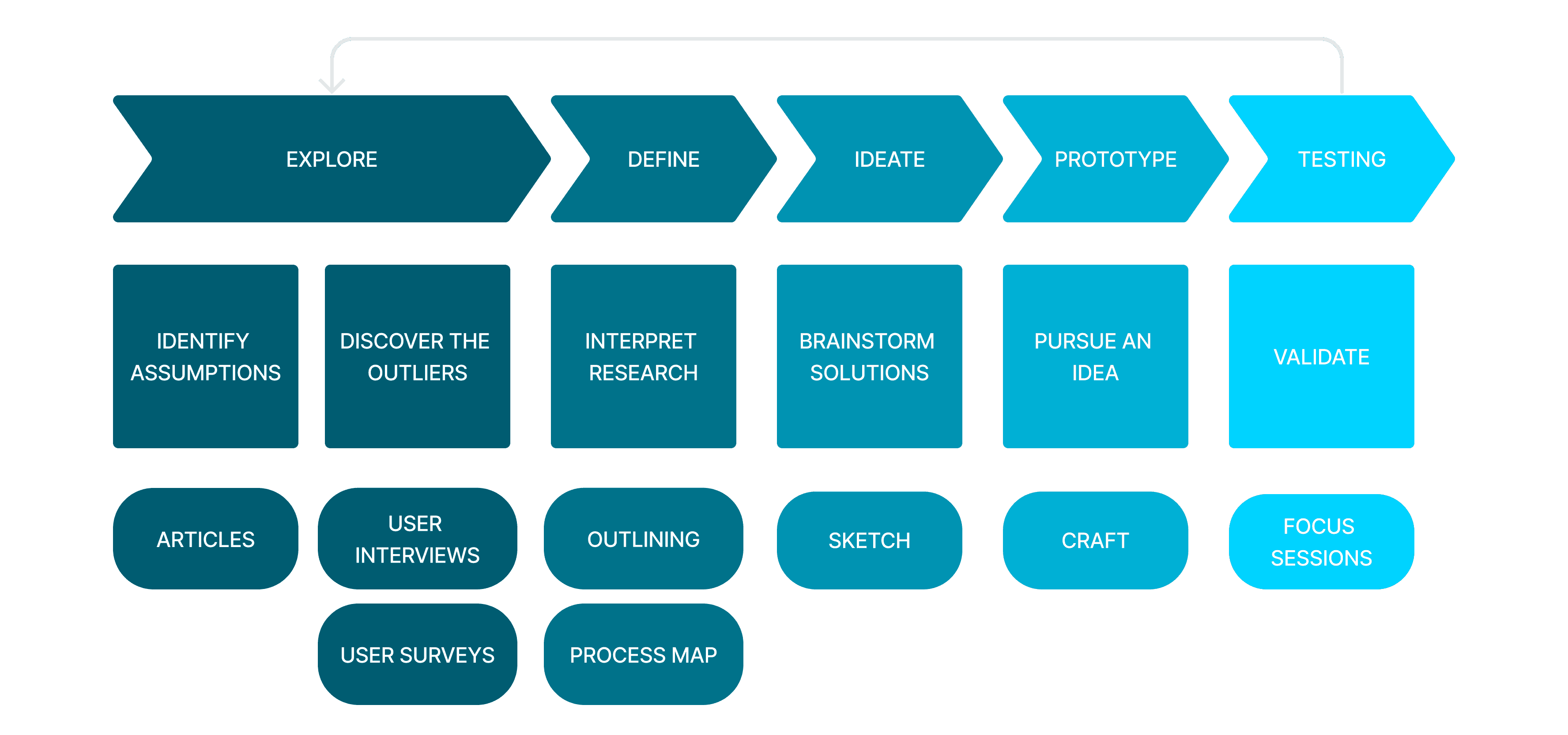
The design process can be summarize in identifying well established assumptions, exploring new insights through user research, and looking at the problem from a different perspective to create a unique solution.
Exploration and Research
The preliminary research process was split into 4 categories, each focusing on different types of information. The first two categories focused on establishing general assumptions while the latter two focused on finding unique perspectives.
Research Methods
Insights Gained
1
Articles & Media
Understanding and establishing assumptions about the topic, includding demographics and general statistics.
People 25 or younger need guidance the most.
Most people turn to friends, family, or social media.
Younger generations prefer more risk.
2
Existing App Reviews
Looking at existing apps and services to determine how the problem was already being addressed.
Existing apps ask for sensitive banking information.
Other apps focused too much on budgeting rather than mentorship.
3
User Surveys
Understanding common pain-points users encounter when seeking for financial advice. Survey sent to 15 participants.
Banks seem more interested in preserving wealth rather than helping users achieve growth.
Most users were told to put their savings into GIC's
4
User Interviews
Searching for unique experiences and discovering outlier perspectives to the problem. 3 User interviews.
Users like to have more than one opinion.
Younger users were highly focused on growth, even if it came with high risk.
Through various research methods, a notable trend emerged. The financial needs of younger generations contrast sharply with those of older ones. As such, large institutions such as banks tend to prioritize older demographics, leading to a disconnect with younger users and their expectations.
User Pain Points
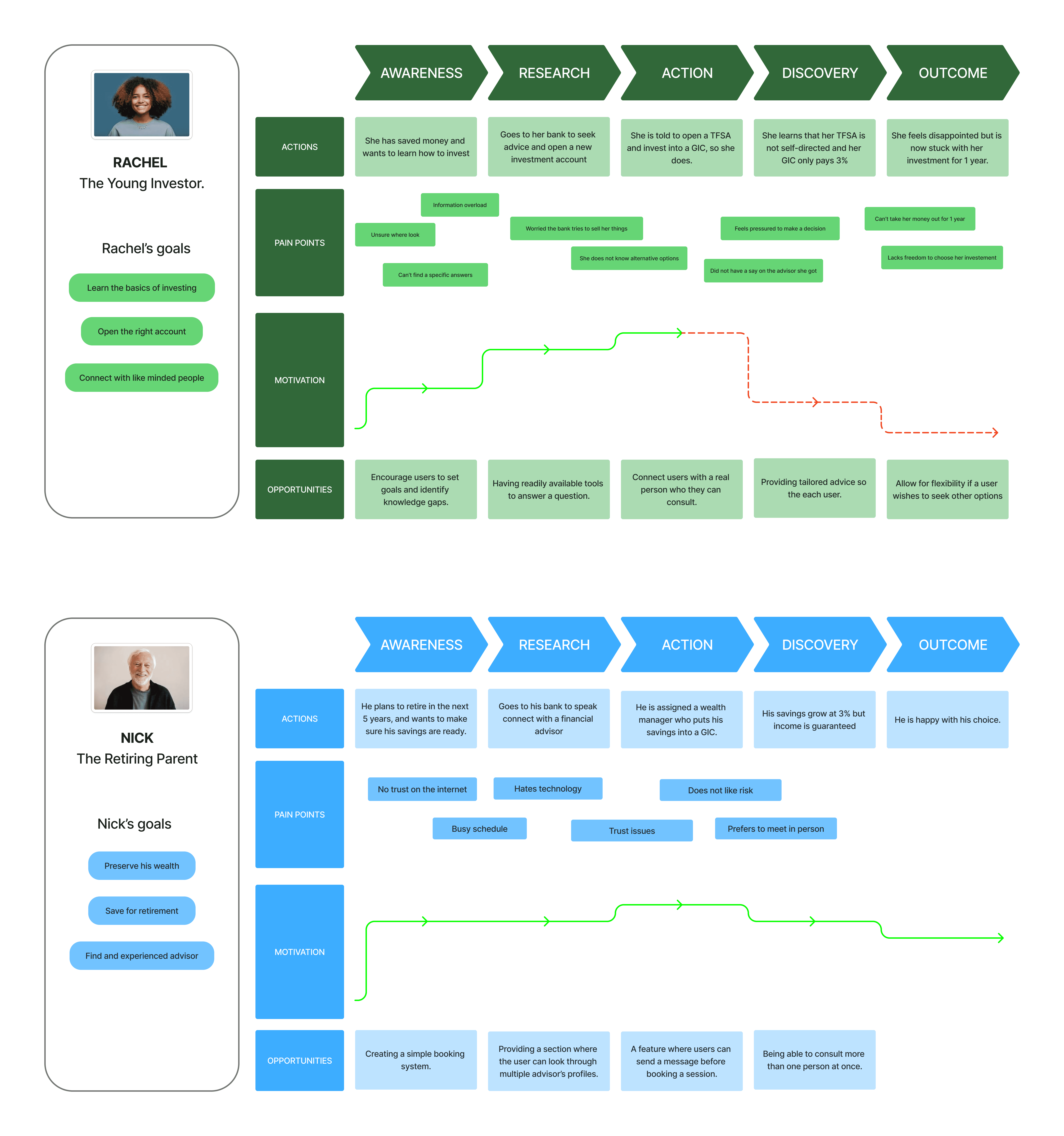
Conducting user interviews and surveys provided a more clear view of user pain points that prevent people from seeking financial guidance. These maps demonstrate the contrast in needs and experiences within users when seeking advice from their bank.
Ideation
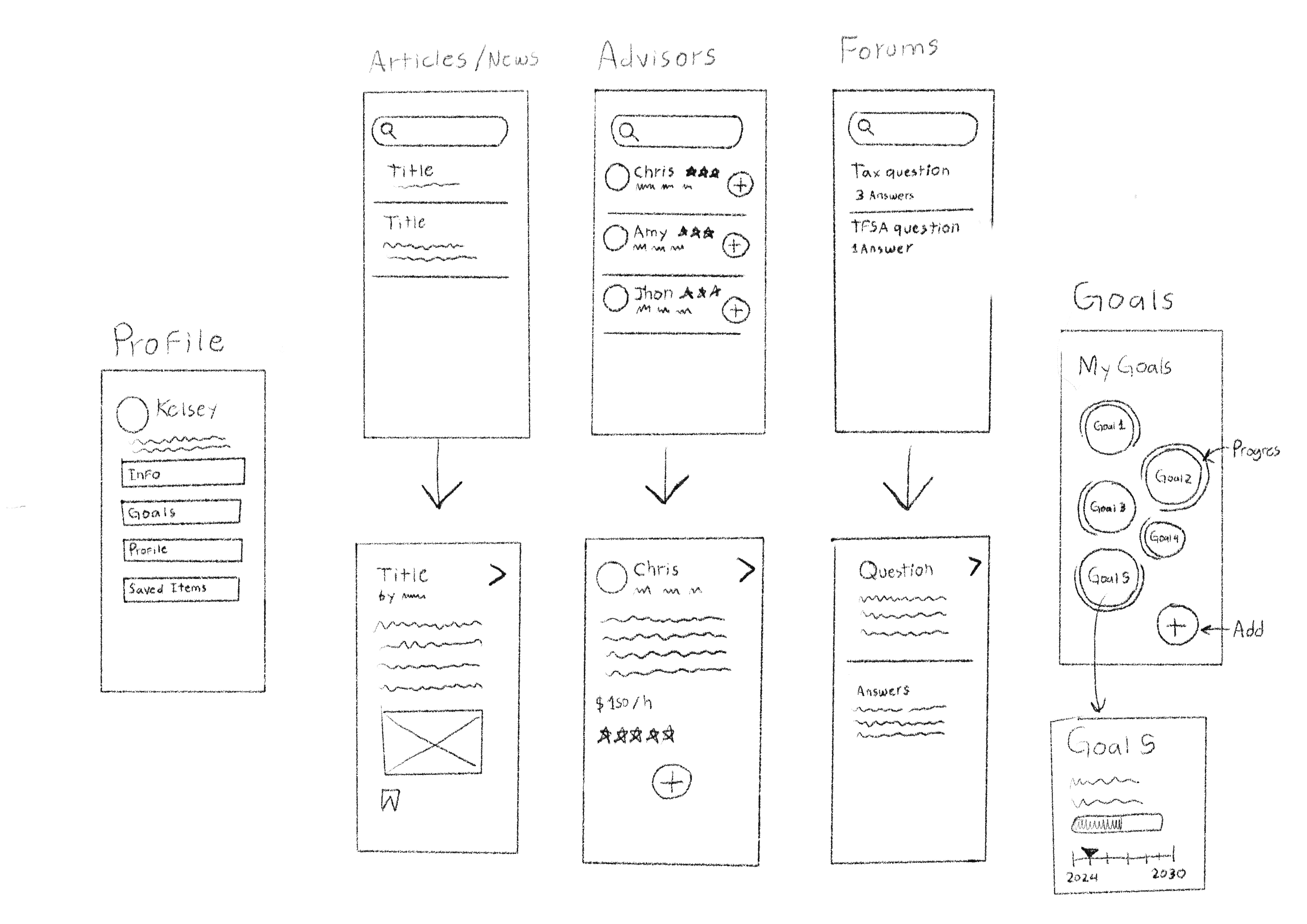
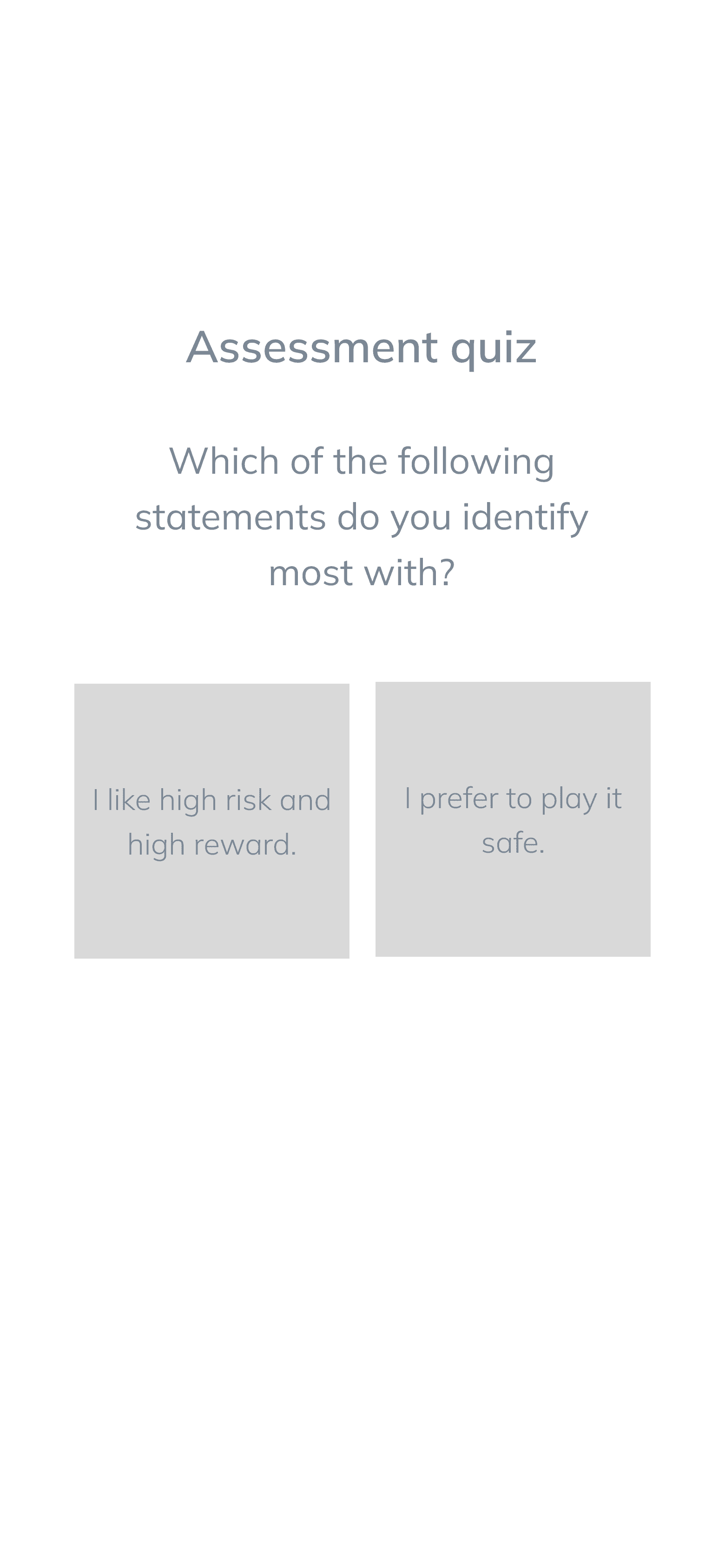
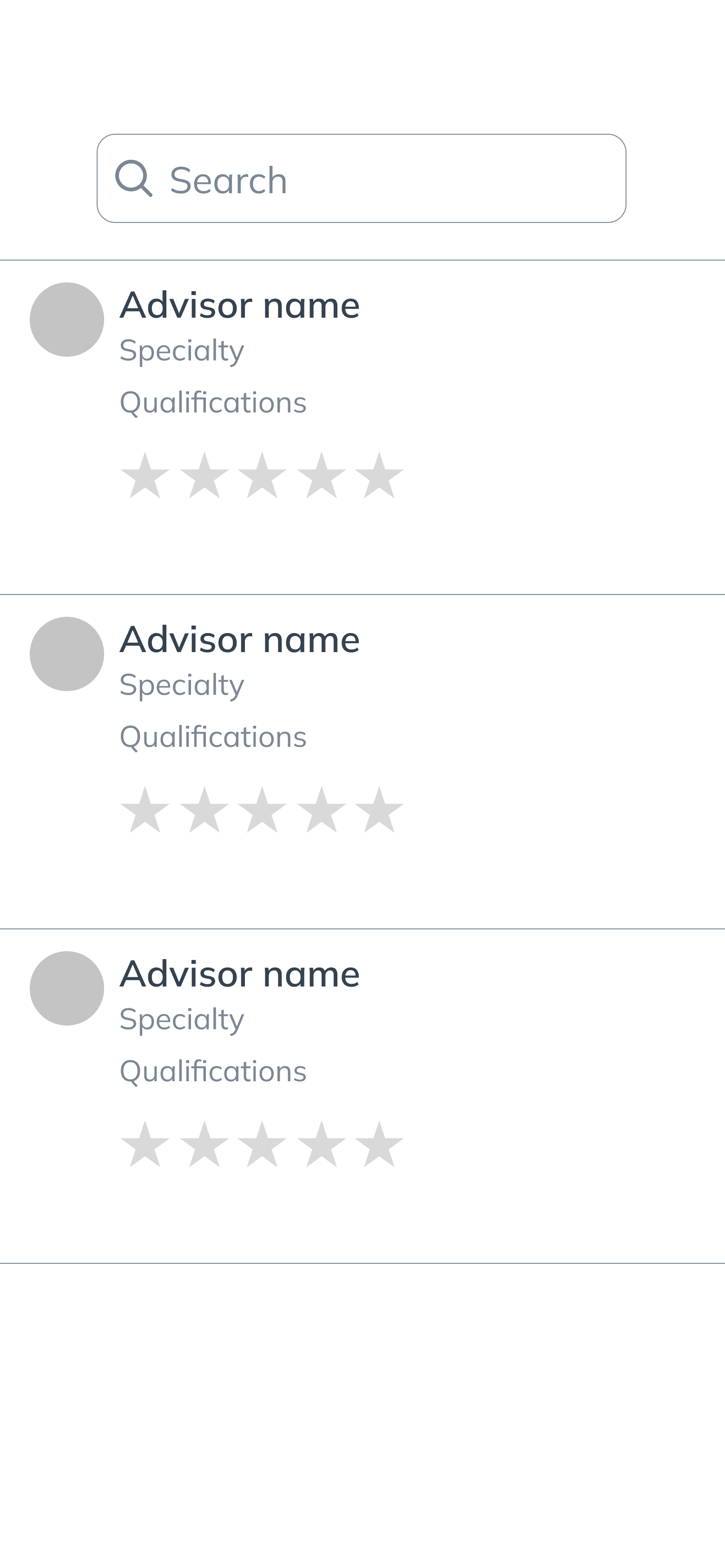
Early sketches focused heavily on creating an intuitive way to organize multiple app features. Creating the information architecture of the app was the first step, followed by designing more detailed interfaces of specific features.
Testing Low-Fi Prototype
The creation of a low fidelity prototype helped to validate some of the initial assumptions made during the ideation process. The prototype was tested by two users through behavioural studies. Users expressed the need for a goal setting feature, as it would help to orient their search for guidance.

Testing High-Fi Prototype
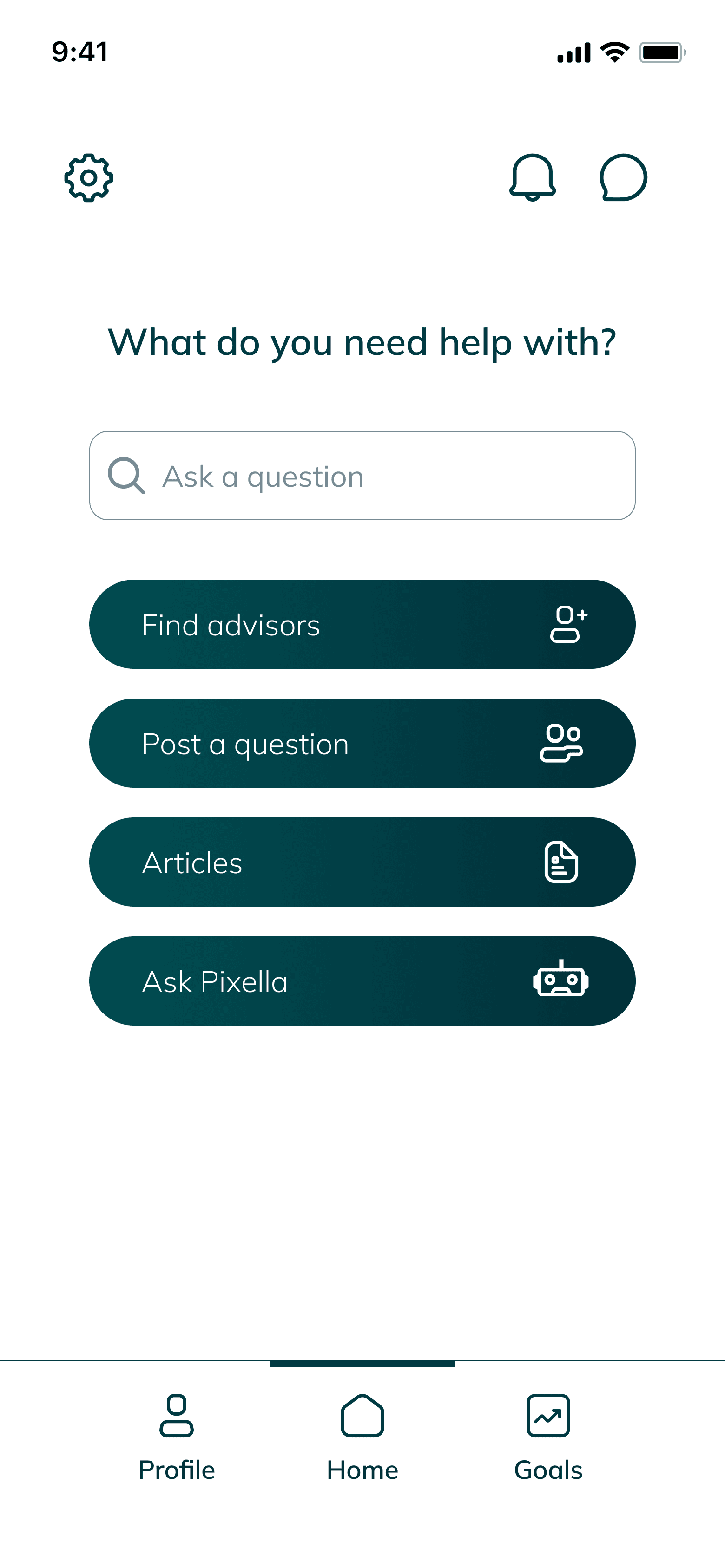
Based on user feedback, more detailed prototype was created to incorporate branding. The chosen colours are blend of forest green and deep blue. Green is often associated with financial growth, while deep blue conveys an atmosphere of knowledge and reliability. Similar branding is often present in educational interfaces, which further conveys the mission of the app.
Before User Test

After User Test
What Changed?
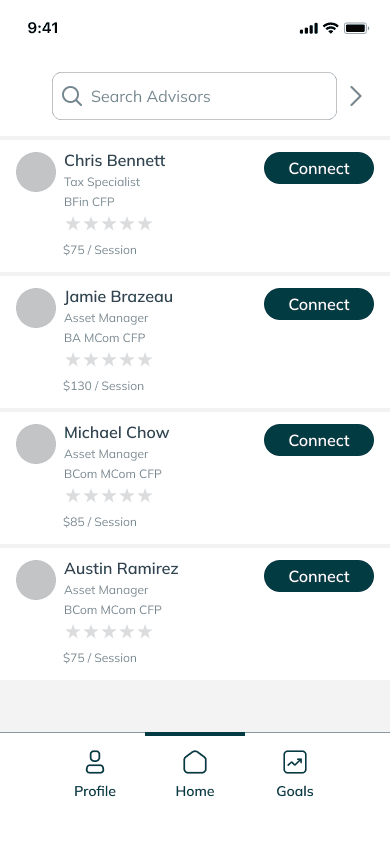
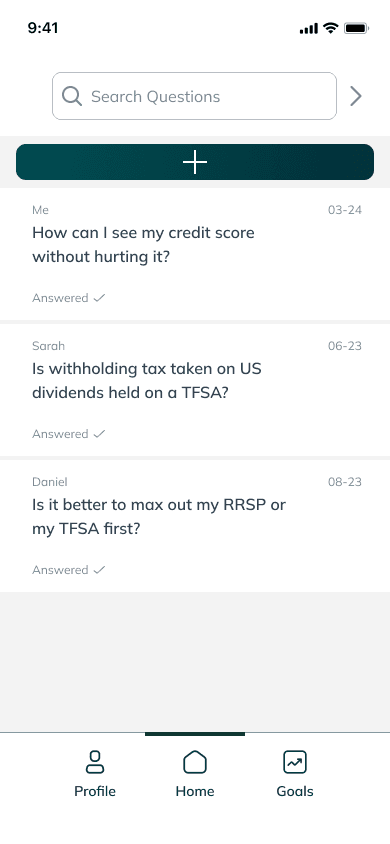
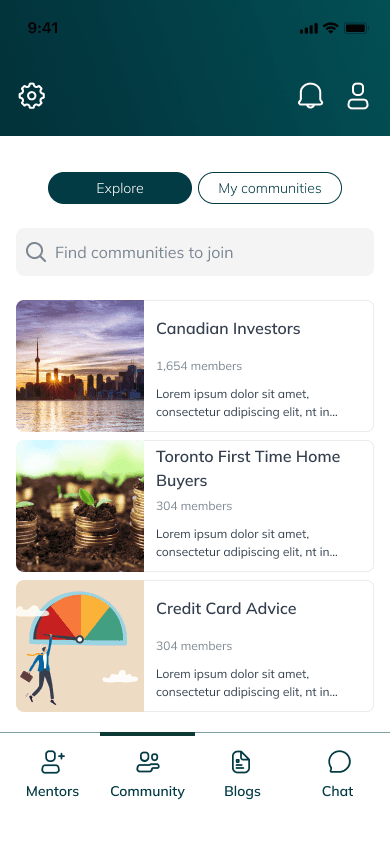
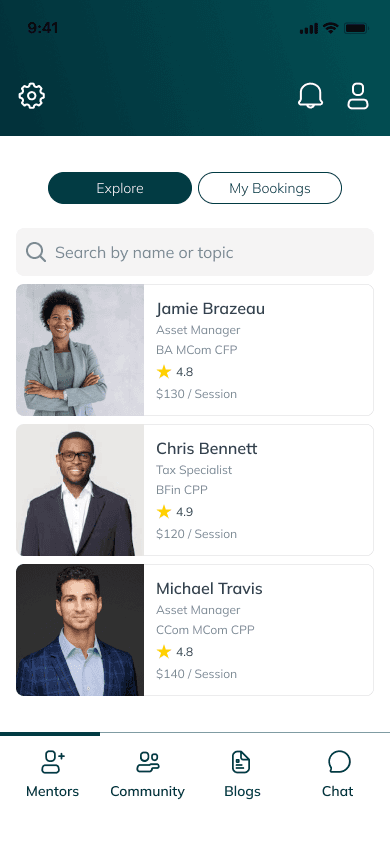
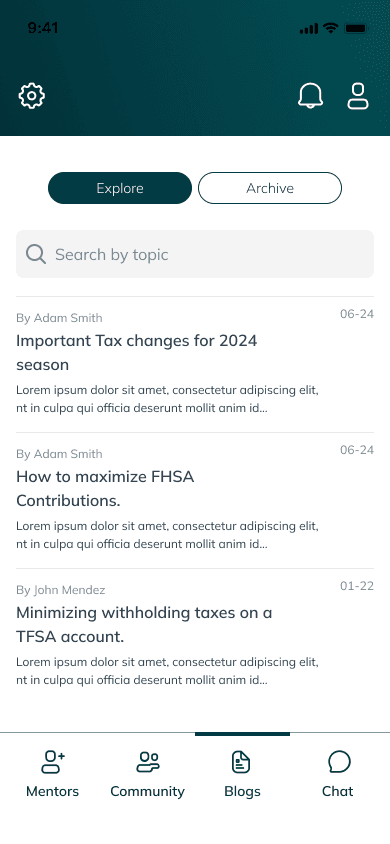
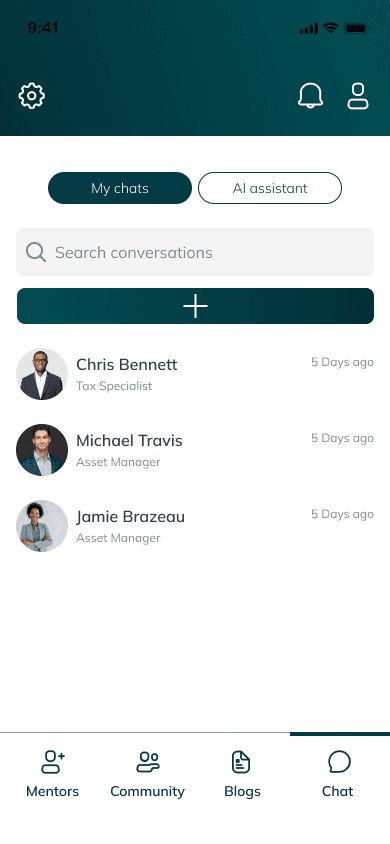
Based on user feedback, the interface was redesigned to separate features of the app into different tabs. The goals feature became optional, as users expressed frustration with too much data input.
Final Prototype
The final prototype encompassed a simple way to connect with mentors and like-minded individuals. The focus of the app was not for budgeting or account management but rather to offer guidance. The main user flows while using the app were as shown:
1
Assessment Quiz
When a user opens the app for the first time, they are prompted with a self assessment survey and goal setting option. The assessments helps the user identify their preferences, strengths and weaknesses. It also helps the system customize recommendations based on the user profile.
2
Guidance Seeking
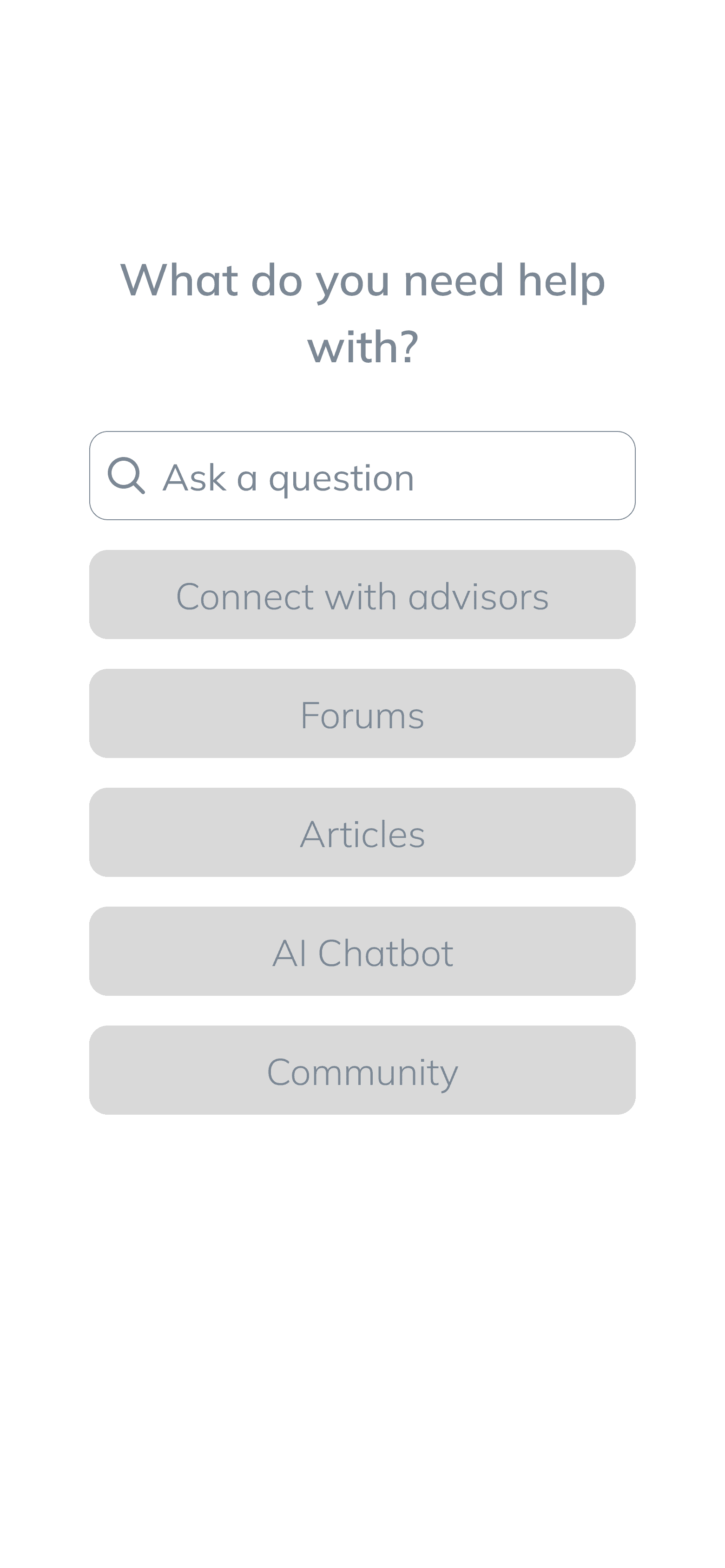
The user can find various options to seek financial guidance, giving them the freedom to choose a method they are most familiar with. Advice provided by the app is tailored to the individual needs of the user.
Lessons Learned
A financial services app is complex, as it is key to understand the user side, as well as the service provider side (financial advisor). Moreover, establishing a target audience was difficult, as there is a wide variety of groups and circumstances why a person might seek financial advice.
People Value Close Connections
Users tend to trust family, friends, or close connections more often. Getting users to establish a meaningful connection with their financial mentor is key to unsure success of the application.
12/15 users would use this app
The main challenge for the app was not just making the process of seeking advice easier, but also convincing users of the benefits of seeking financial mentorship early on. Most people could not differentiate a financial advisor from a portfolio manager.